Fulham Palace stands as one of the most significant historic sites in south-west London, offering residents a tangible connection to nearly 1,300 years of continuous habitation on the banks of the Thames.
The Grade I listed building served as the country residence for the Bishops of London from at least the ninth century until 1973. The palace complex incorporates architecture spanning multiple centuries, with the oldest surviving sections dating from the fifteenth century. Subsequent additions and renovations reflect Tudor, Georgian, and Victorian periods, creating a layered architectural heritage visible throughout the structure.
The site extends across thirteen acres of gardens and grounds, including the second-oldest walled garden in England. This botanical space has been cultivated since the sixteenth century, when Bishop Grindal introduced the tamarisk plant to England. Today, the garden maintains its productive character, supplying vegetables and fruit whilst serving as a resource for horticultural education.
Community Access and Programming
Since the Church of England transferred the property to the Fulham Palace Trust in 2011, the site has operated as a public museum with free admission to the main house and gardens. The trust programmes regular exhibitions, educational activities, and community events that draw visitors from across Fulham and beyond.
The palace archives contain extensive documentation of the bishops' tenure, including records of their role as local landowners and ecclesiastical administrators. These collections illuminate the social and religious history of Fulham, providing researchers with primary sources on the area's development from a rural Thames-side parish to its present urban character.
Architectural Significance
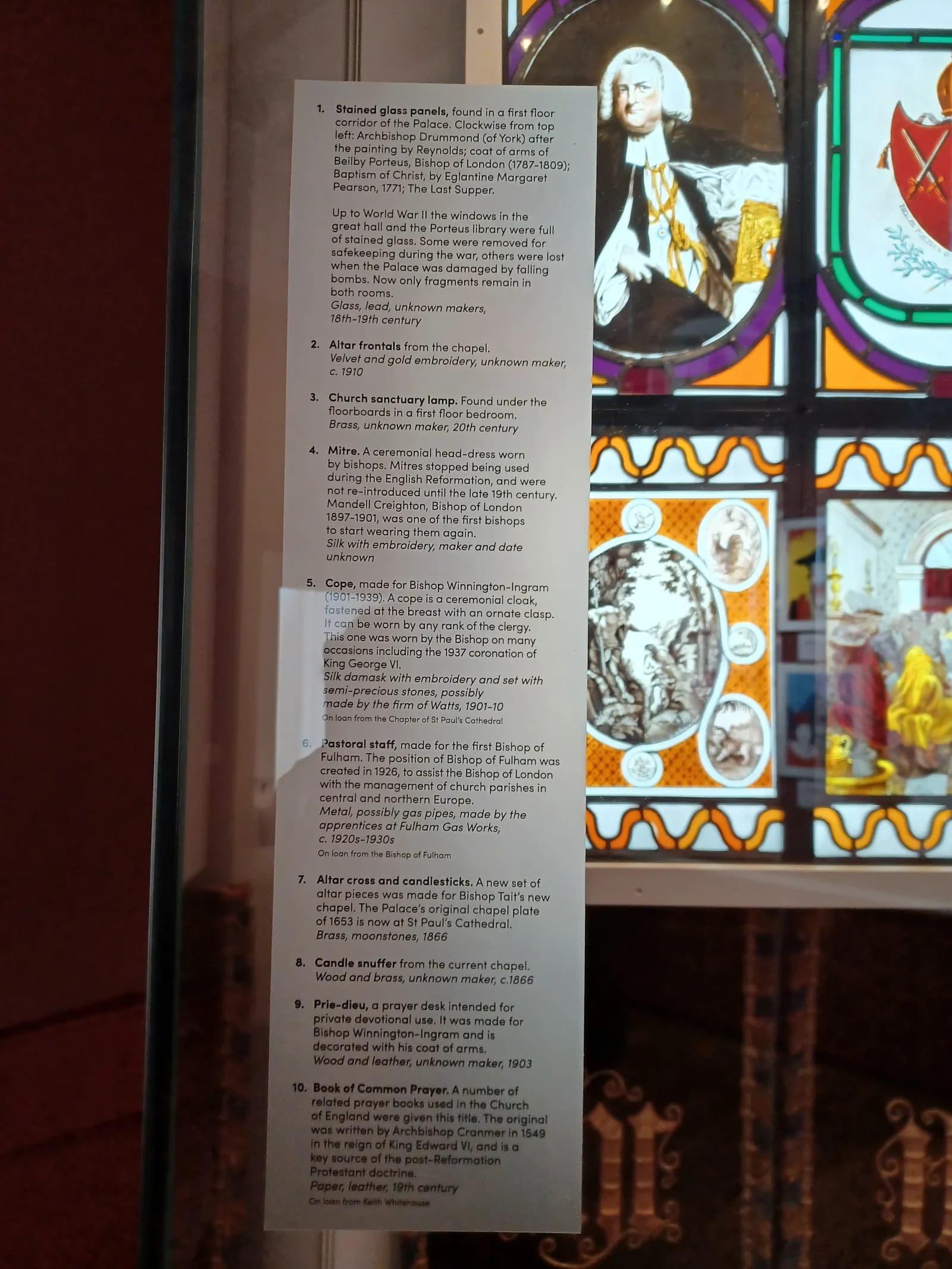
The building's mixed architectural heritage reflects its long occupation by successive bishops, each of whom modified the structure to suit contemporary tastes and requirements. Notable features include the Tudor courtyard entrance and the Great Hall, which contains elements from multiple construction phases. The chapel, though modest in scale, contains fittings from the eighteenth century.
The palace's riverside location originally served practical purposes for transport and communication. The bishops maintained a private dock for travel to Westminster and other Thames-side properties. Though the dock has disappeared, the site's relationship with the river remains evident in its aspect and setting.
Visiting Information
Fulham Palace is situated on Bishop's Avenue, SW6, accessible via public transport from Putney Bridge station or local bus services. The museum operates regular opening hours throughout the week, with the gardens accessible daily during daylight hours. The on-site café occupies the former coach house, providing refreshments with views across the grounds.
The trust's education programme serves local schools, offering curriculum-linked sessions on history, archaeology, and horticulture. Adult learning opportunities include guided tours, lectures, and practical gardening workshops.
For Fulham residents, the palace represents both a significant heritage asset and an active community resource, connecting the area's present population with its medieval and early modern past.