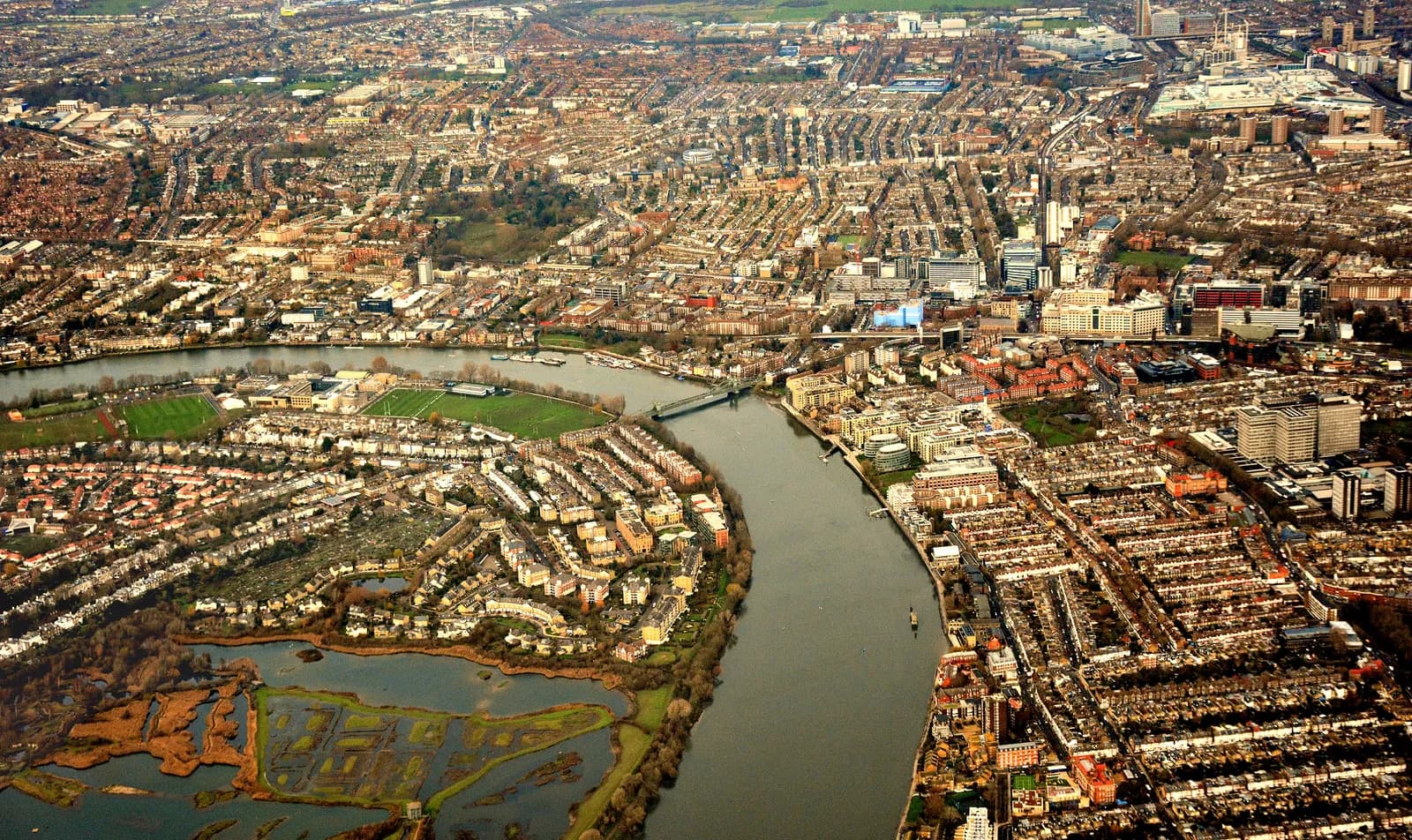
Fulham sits three and a half miles southwest of central London, tucked into a loop on the north bank of the River Thames. An area of extraordinary depth and contrast, it manages to feel both intimately local and distinctly cosmopolitan; a place where Premier League match days and quiet village greens coexist within minutes of each other.
This magazine exists to chronicle that complexity. Whether you have lived here for decades or arrived last week, Fulham rewards attention. The area recorded its first mention in 691 AD, when it appeared as the Manor of Fulham granted to the Bishop of London. For nearly one thousand years, Fulham Palace served as the bishops' country residence, making it one of the longest continuously inhabited episcopal homes in England. Today, the Grade I listed palace and its thirteen-acre grounds, complete with the largest domestic moat in medieval England and London's second-oldest botanical garden, stand as a free museum and public space.
The Village Character
Parsons Green remains the spiritual heart of Fulham's village identity. The triangular green, bounded by New King's Road and Parsons Green Lane, sits within a conservation area adjacent to Eel Brook Common. This is where the area's distinctiveness becomes tangible. While Chelsea to the east offers retail density along King's Road and Sloane Street, Fulham retains a quieter, more residential character. The 2011 census recorded Parsons Green & Walham as the highest-income ward in Hammersmith & Fulham, with an average gross household income of £63,700 by 2018. Yet the area's demographics remain notably diverse; the ward's population includes significant communities of French, Polish, Portuguese, and Irish residents alongside White British households.
The borough overall contains the second-highest proportion of single adults in England and Wales, at 55%, and a higher-than-average share of residents aged 20 to 29. This mix creates a neighbourhood that accommodates young professionals in Victorian mansion flats, families in terraced houses, and long-term residents who remember when the area looked very different.
Riverside and Recreation
Fulham's Thames frontage shapes its geography and its appeal. Bishops Park, opened by the London County Council in 1893 on land donated by the Church Commissioners, runs along the river from All Saints Church to Bishop's Park Road. The Grade II listed park underwent a lottery-funded restoration in 2011 that modernised its facilities whilst preserving its essential character. Today it offers tennis courts, bowling greens, a poolside beach, and a skate park alongside quieter stretches of the Thames Path.
The riverside walk connects these green spaces to Craven Cottage, home of Fulham Football Club since 1896. The stadium's Johnny Haynes Stand, built in 1905, holds Grade II listed status. A more recent redevelopment of the Riverside Stand, completed in 2024 and now branded as Fulham Pier, has increased capacity to approximately 29,600 whilst creating a destination venue along the waterfront.
A Sporting Capital
Fulham claims a unique position in London's sporting landscape. Two Premier League clubs operate within its boundaries; Fulham F.C. at Craven Cottage and Chelsea F.C. at Stamford Bridge, which sits on Fulham Road despite the club's name. The borough also houses the headquarters of British polo at The Hurlingham Club, founded in 1869 on forty-two acres. The club published the first codified rules of polo in 1873, rules still followed worldwide. Nearby Queen's Club, founded in 1886, hosts the annual pre-Wimbledon grass-court tennis championships and maintains twenty-eight outdoor and ten indoor courts.
Transport and Accessibility
The District line provides the area's primary Underground connection, with stations at Fulham Broadway, Parsons Green, Putney Bridge, and Ravenscourt Park. Barons Court and West Kensington offer additional District and Piccadilly line access. Imperial Wharf railway station connects residents to the West London Line, with services to Willesden Junction, Clapham Junction, and East Croydon. The area's road connections include the A304 and A308 along Fulham Road, the main east-west artery linking Putney Bridge to Knightsbridge.
Local Amenities and Services
Fulham Road functions as the area's commercial spine, known for its concentration of antique dealers, interior furnishing shops, and designer boutiques. The street also houses significant healthcare facilities; Chelsea and Westminster Hospital, Royal Brompton Hospital, and Royal Marsden Hospital all sit on or near Fulham Road. For everyday shopping, North End Road has historically served as an unofficial high street, whilst Fulham Broadway provides a compact retail centre.
The London Borough of Hammersmith and Fulham, which includes Fulham within its boundaries, maintains the lowest council tax rate in the country. The council has received the highest national rating for its housing service in 2026.
Recent Developments
The area has undergone significant transformation since the late twentieth century. Once predominantly working-class with industrial roots in gas lighting, pottery, and brewing, Fulham gentrified rapidly from the 1990s onward. Victorian housing stock and riverside access drew professionals and families, establishing Fulham as one of London's most desirable Zone 2 neighbourhoods.
Recent years have brought further change. The Fulham Palace restoration, completed in 2019 after a £19 million project funded by the National Lottery Heritage Fund, reopened the Tudor Great Hall and reinstated sections of the historic moat. A new museum now occupies the palace, and the walled garden has been restored to public access. On the transport front, next-generation Piccadilly line trains are expected by 2026, and Barons Court station has undergone refurbishment.
What This Magazine Will Cover
Fulham Magazine will track these threads; the historic and the contemporary, the local and the metropolitan, the settled and the changing. We will cover planning decisions affecting the area, profile local businesses and residents, report on council services and transport developments, and examine the cultural life that makes Fulham distinct from its neighbours. The Earl's Court redevelopment, an eighty-acre high-rise scheme on the borough's eastern boundary involving the demolition of historic exhibition centres, represents one of several major changes on the horizon that will affect local residents.
Our coverage aims to be factual, specific, and grounded in verifiable sources. We will not invent quotes, attribute intentions without evidence, or present speculation as certainty. When sources conflict, we will describe what each reports rather than choose sides without authoritative resolution.
Fulham has spent over thirteen centuries evolving from an Anglo-Saxon manor to a modern London district. This magazine intends to document that evolution as it continues.